The MK2 family
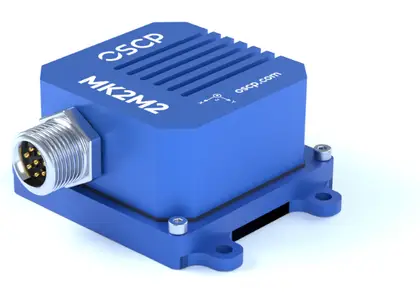 MK2M2
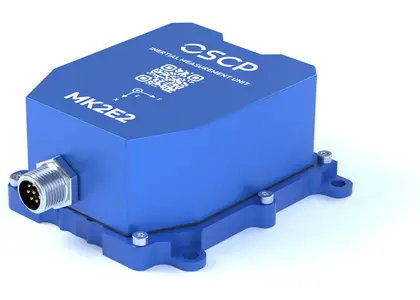 MK2E2
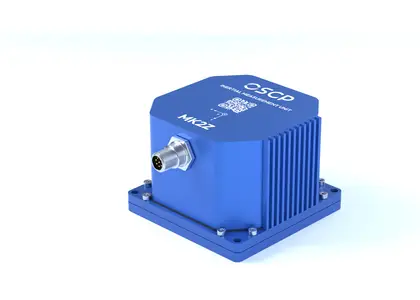 MK2Z
This section opens when we build the full site.

Phase between the two beams, shown magnified. The rate is how fast you are turning the chip.
Drag the chip, or use the arrow keys
Drag across the map to drive it
Drag to turn them
Streets © OpenStreetMap contributors
Light runs round a closed path on a silicon chip, both ways at once. Turn the chip and one way becomes effectively longer. The two beams arrive out of step, and that difference is the rotation rate.
9 January 2026. 21 minutes through the downtown core at up to 50 km/h, with GNSS positioning withheld from both units and kept only to score them.
Heading from each gyro alone, plus a 1 Hz speed input. No Kalman filter, no map matching, no tuning for either unit.
Final position error at the end of the drive, MK2E2 photonic against MK2M2 MEMS. A 3.6x smaller error, and heading was never aided.
Source: OSCP case study, Photonic vs MEMS, proven on real roads. Paths traced from its Fig. 1; streets from OpenStreetMap.
The chip is the photonic core of the MK2E2, a tactical photonic IMU with its optical gyro on the Z axis.
An INS processing unit that turns any OSCP IMU into a full inertial navigation system. It fuses inertial data with dual-antenna, RTK-compatible GNSS to output continuous position, velocity and attitude.
Preorder is open for the first production batch.
See it at CES 2027, Las Vegas, January 6 to 9. Booth 7168.
This section opens when we build the full site.
This section opens when we build the full site.
This section opens when we build the full site.
This section opens when we build the full site.